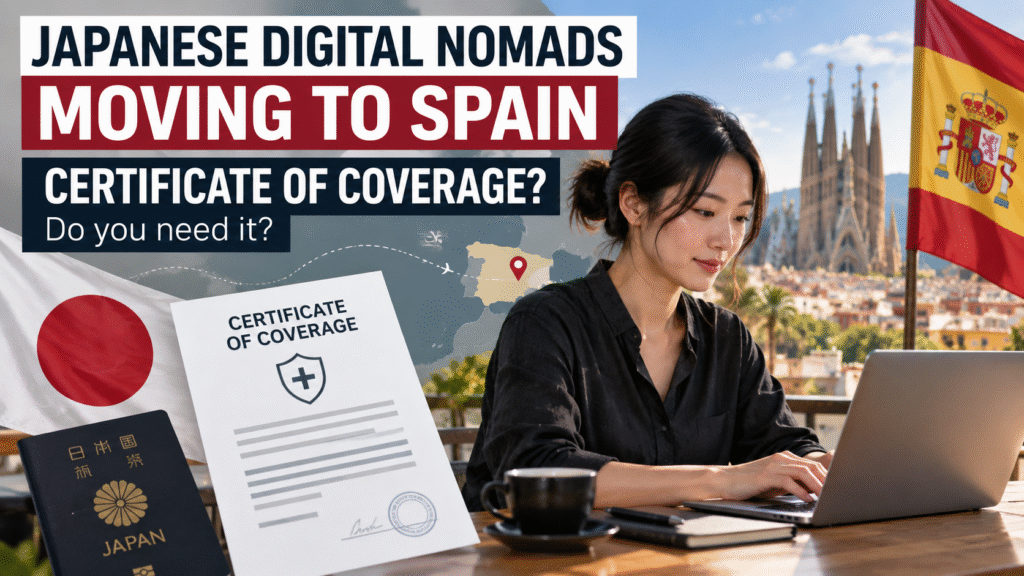
Can someone who lives off Airbnb rentals and stock market returns really be a “digital nomad”? This digital nomad visa Airbnb income case forced us to test the limits of Spain’s remote-worker residence permit, and won.
An Unusual Profile: No Employer, No Clients
Our client’s income came from two sources: tourist rental income from owned properties, managed through platforms like Airbnb, and returns from stock market and other financial investments.
No employment relationship. No client contracts. Just self-managed assets, which raised a real legal question: does that count as remote work at all?
Most caseworkers are used to reviewing files from employees or freelancers with named clients. A profile built entirely on property and portfolio management doesn’t fit that template, so it needs to be explained, not just documented.
The Legal Grey Area We Had to Navigate
The Digital Nomad regulation under Law 14/2013 doesn’t list permitted professions or income types. It requires only that the applicant perform a professional or work activity remotely, using technological means, not directed at the Spanish market.
That silence cuts both ways: it leaves room to argue an atypical profile fits, but only if it’s presented with real legal rigour.
Without that rigour, a caseworker has little reason to treat rental or investment income as anything other than passive wealth, which is exactly the assumption we had to overturn with documented, ongoing management activity.
Building the Digital Nomad Visa Airbnb Income Case: Four Pillars
We built the case on four pillars:
- Property and asset management as a genuine professional economic activity, even without a direct client.
- Demonstrable, recurring income sufficient to be financially self-sufficient.
- Regular use of technological means to manage investments and properties remotely.
- No ties to the Spanish market: neither the tenants nor the investments were located in Spain.
Living off rental or investment income? This route may still be open to you.
📅 Book Your Consultation →The typical file
Income fromAn employer or named clients ProofContracts, payslips, invoices Caseworker reactionFamiliar, easy to checkThis investor file
Income fromTourist rentals abroad and financial investments ProofRecurring income plus evidence of active, remote management Caseworker reactionNeeded a legal argument, then approvedOutcome: Investment Profiles Can Qualify
The authority accepted the argument and issued a favourable ruling, confirming that an investor profile can fit the Digital Nomad framework when presented with the right evidence.
The Digital Nomad residence isn’t limited to employees or freelancers. Real estate investors and asset managers can qualify too, if the file demonstrates a real, sustained, internationally-sourced activity.
This digital nomad visa Airbnb income case is now one of the clearest examples we have that an unconventional income profile, properly framed, can meet the same legal standard as a traditional remote job.
Digital Nomad or Non-Lucrative?
If your income is truly passive and you do not actively manage it, the non-lucrative visa can be the simpler route, as long as you do not plan to work in Spain. If you actively run your properties or portfolio online, the Digital Nomad permit can fit, and it allows you to work. The right choice depends on how your income is generated, not only on how much you earn.


Why This Process Is Harder Than It Looks
- Assuming passive income automatically disqualifies you. The law doesn’t name eligible professions, only the activity’s shape.
- Failing to frame asset management as an activity. Without that framing, rental or investment income reads as pure passivity to an examiner.
- Overlooking the “not directed at Spain” requirement. Properties or investments tied to the Spanish market can undermine an otherwise strong case.
- Submitting thin proof of recurring income. Sporadic or undocumented returns don’t demonstrate financial self-sufficiency.
Talk to a Lawyer Before You File
If your income comes from investments, rentals, or other sources that don’t look like a traditional job, that doesn’t automatically rule out a Digital Nomad visa. At MigratioLex, we review your specific case, not a generic checklist. We respond within 24 hours, in English, French or Spanish.
Book Your Initial ConsultationThis article is for informational purposes only and does not constitute legal advice. Based on Law 14/2013, of 27 September, on support for entrepreneurs and their internationalisation (international teleworker / digital nomad route).