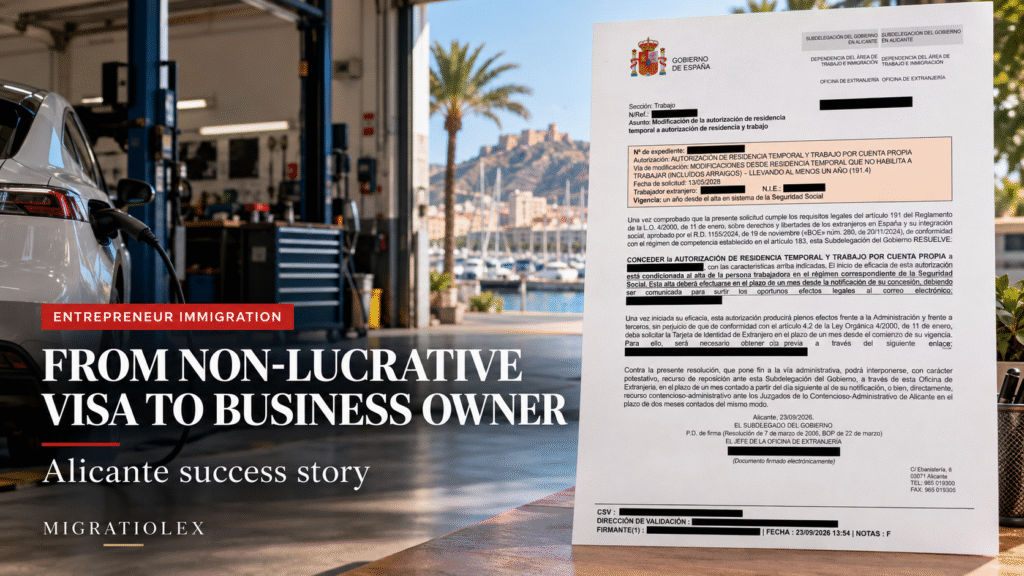
Two months after filing, the denial letter arrives on a Tuesday, for insufficient proof of genuine business activity, in the same company you have run for three years. You had already told your team you were relocating. If you own the business behind your remote work, that single detail changes how your Spain digital nomad visa application gets reviewed, and in 2026 the bar for proving it has moved higher.
Employee vs. Business Owner: Two Different Standards
Law 14/2013 (article 74 bis and following) was written with a remote employee in mind: a foreign contract, a salary, a company that already existed before the application.
When you’re also the owner, director, or majority shareholder of that company, the bar moves. Officers need proof the company is real and active, not just set up to support your visa.
Before you get into the business-owner-specific details below, it helps to know the baseline: our complete guide to Spain’s Digital Nomad Visa walks through the core eligibility rules that apply to every applicant.

What “Genuine Business Activity” Actually Means
Article 74 ter requires at least one year of real economic activity. A certificate of incorporation alone won’t satisfy this requirement.
Denied files are usually missing consistent evidence across several documents at once. Officers are looking for:
- Registration records showing the company existed well before you applied.
- Tax filings consistent with real, ongoing activity, not a dormant shell.
- Invoicing history that lines up with the company’s stated business.
- Income that doesn’t depend solely on your own remote work.
The 2026 Shift: Heavier Documentation
Criteria for business-owner applicants have visibly tightened this year. Officers increasingly ask for audited financial statements instead of internal accounts.
Bank statements now need the issuing bank’s stamp, not a PDF export, and officers want to see an employment history showing staff beyond just you.
This is a direct response to a wave of applications backed by companies with no real operating history behind them.
Business Owner or Autónomo? Worth Comparing
If your foreign company is small or newly active, it can be worth comparing the business-owner route against applying as a self-employed remote worker (autónomo) for the same clients.
The documentary burden is often lighter that way. It isn’t the right call for everyone, but it’s worth weighing before you file, not after a denial.

If You’ve Already Been Denied: What an Appeal Can Fix
A denial isn’t always final. Many refusals come from a narrow reading of what the administration actually asked for, not from an unfixable gap in the file.
Common grounds for a recurso de alzada include insufficient motivation in the denial itself, or a document request that got reinterpreted more narrowly than it was written.
An appeal only works if it’s filed within the legal deadline and addresses the actual reasoning in the denial, not a general rebuttal. Timing and drafting both matter.
Why This Process Is Harder Than It Looks
- Submitting the company’s own accounting summary instead of an independently issued financial statement is one of the most common mistakes we see.
- Sending documents that were translated before being apostilled is another. Some offices reject this outright, since the translation should certify the apostilled document, not just the original.
- Treating a request for extra documentation as optional, or answering it more narrowly than intended, can itself become grounds for denial.
- Assuming the company’s legal existence on paper is enough, without assembling proof it actually operates, is the mistake behind most of these files.
Not Sure Which Route Fits Your Situation?
A two-minute check can tell you whether your current setup is more likely to succeed as a business owner or as a self-employed applicant.
Check Your Eligibility in 2 Minutes →A Spanish Business Account Also Helps Prove You’re Real
One detail examiners quietly weigh alongside your paperwork: does your day-to-day banking look like a real, operating business, or like an account opened purely to support a visa file? Clean, separated business banking is not a legal requirement on its own, but it is the kind of supporting evidence that makes the rest of your file easier to believe. These are the three accounts we see our own clients use most, depending on their stage.
No NIE Needed to Start
bunq
Open a personal account in about 5 minutes with just your ID, no Spanish paperwork required on day one. You get 90 days to add your NIE once you have it.
Open Your bunq Account →Built for Companies
Qonto
Qonto’s business account keeps your company’s finances separate, organized and easy to hand to your accountant, exactly the kind of clean paper trail that supports a genuine-activity file.
Open Your Qonto Account →Once You’re Fully Settled
Bankinter
A traditional Spanish digital account with no fees and interest on your balance, a solid option once your TIE is in hand and you’re being paid locally.
Open Your Bankinter Account →MigratioLex may receive a commission if you open an account through these links, at no extra cost to you. We only recommend providers our clients actually use.
That Tuesday letter is rarely the end of the story. It usually just means the file was built around the wrong evidence, not around the wrong route. What decides whether your company gets read as real is the paperwork assembled months before you file, not the appeal you write after.
Talk to a Lawyer Before You File, or Before You Appeal
If you own the company behind your remote work, your file needs a different strategy than a standard employee application. That difference matters most before you submit, not after a denial arrives. At MigratioLex, our immigration lawyers review your specific structure, not a generic checklist. We respond within 24 hours, in English, French or Spanish.
Book Your Initial ConsultationThis article is for general informational purposes only and does not constitute legal advice, nor does it create an attorney-client relationship. Based on Law 14/2013 (article 74 bis and following) on the international teleworker authorisation and current administrative practice; verify the applicable requirements for your specific case before relying on them.